Artificial intelligence is usually framed as a technological breakthrough. Yet public debate tends to gloss over the theoretical foundations of these systems and their implications for organizations and social practice. It was this gap that prompted Cristina Alaimo and Lauren Waardenburg to launch the first edition of the Theorizing Data and AI conference at LUISS (Rome) in 2023, bringing scholars together for an interdisciplinary dialogue that could treat data and AI as objects of inquiry in their own right, asking what is genuinely new about them and how they reshape the way we organize and live.
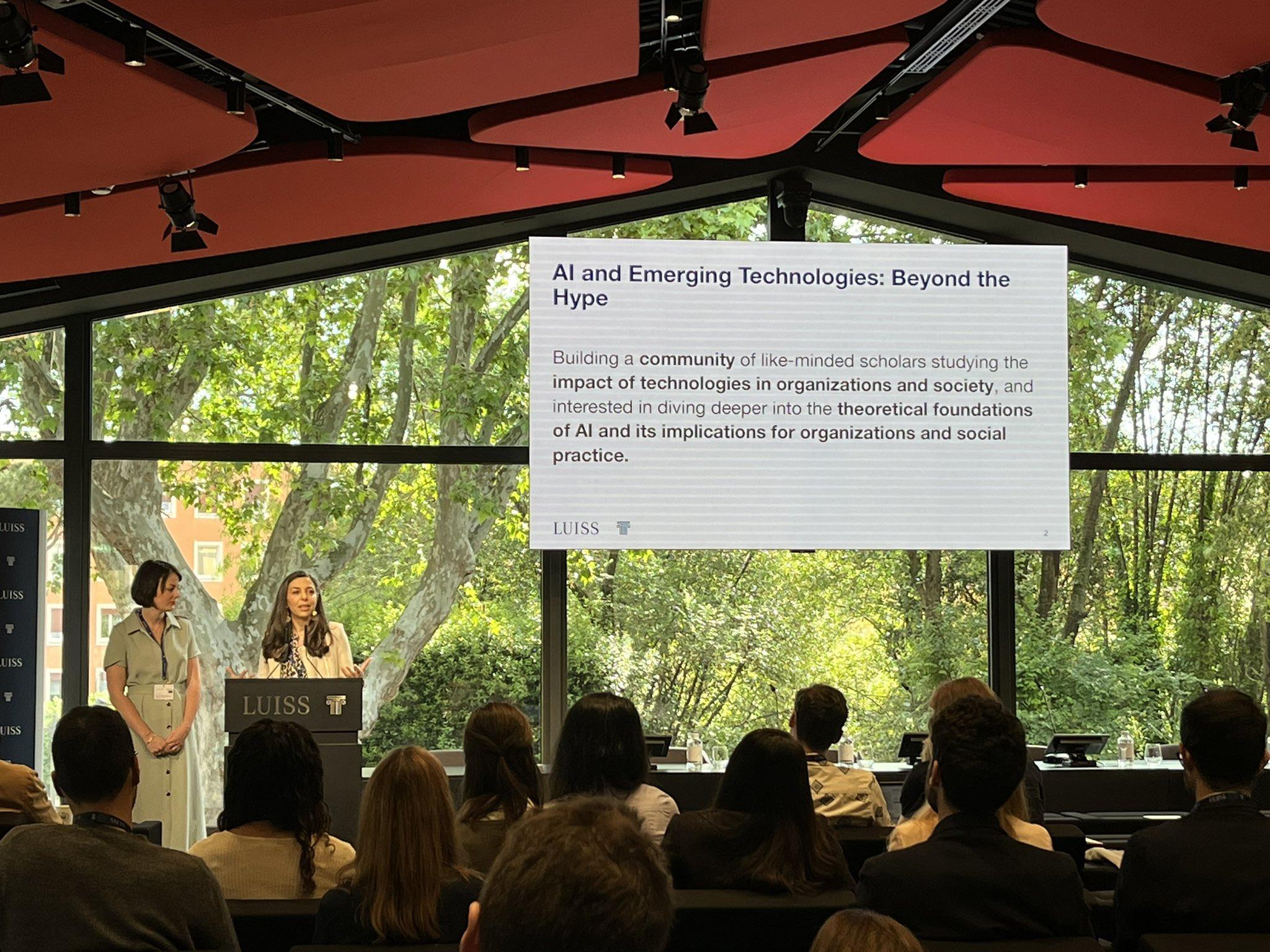
The idea animating the project was to create a community that explores the relations between Data and AI through multiple perspectives and theoretical lenses. The first edition of the conference set the stage with the keynote by Jannis Kallinikos, who highlighted how AI cannot be understood separately from the data that train its models, and that AI technologies increasingly shape and participate in the production of data. Since the first edition, it was clear that what was missing was a social science of data AND AI, one focused on understanding the nexus between the two rather than treating them as separate poles.
Over the years, many contributions have helped advance this purpose. In 2024, during the second edition at ESSEC Business School in Paris, Cristina Alaimo and Jannis Kallinikos presented their award-winning book “Data Rules: Reinventing the Market Economy”, in which they reconstruct the history of data and the role of data in society and the economy, together with the role that data play in the age of AI. Another notable contribution came during the 2025 edition from Youngjin Yoo, who focused on the concept of the semantic machine through a keynote speech that reconstructed the history of AI while engaging with fundamental questions concerning data, knowledge, and meaning. In the spirit of interdisciplinarity, in the same year, Michael Power, the father of critical accounting and author of “The Audit Society”, presented his upcoming book “Economy of Traces: Traceability, Tracking, and the Accounts We Live By”, where he proposes a traceological theory of accounting, highlighting new trade-offs we observe in our economies between digital traceability, privacy, and human oversight and accountability.
Four years after the launch of Theorizing AI, the community has expanded considerably. The conference now welcomes more than twice the number of original participants and receives hundreds of submissions, supported by a scientific committee of recognized experts who advise on the development of the community and its various initiatives, which have now expanded beyond the annual conference and include events in major international conferences, such as the panel “AI and Organizational Knowledge: On Data, Cognition and Expert Learning” organized by Jannis Kallinikos for ECIS 2026 (Milan) with Cristina Alaimo, Nicholas Berente, Marta Stelmaszak and Youngjin Yoo participating as panelists.
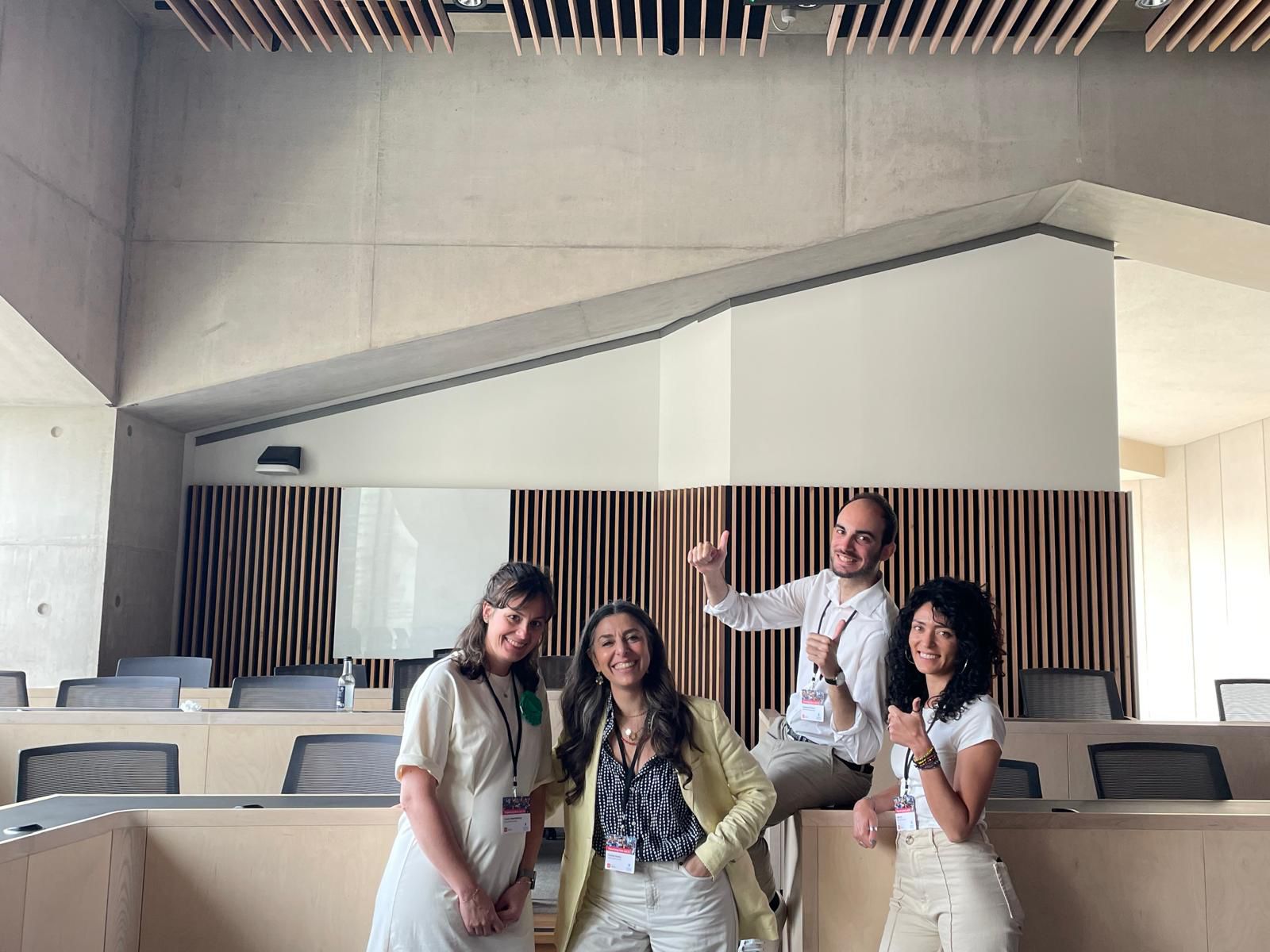
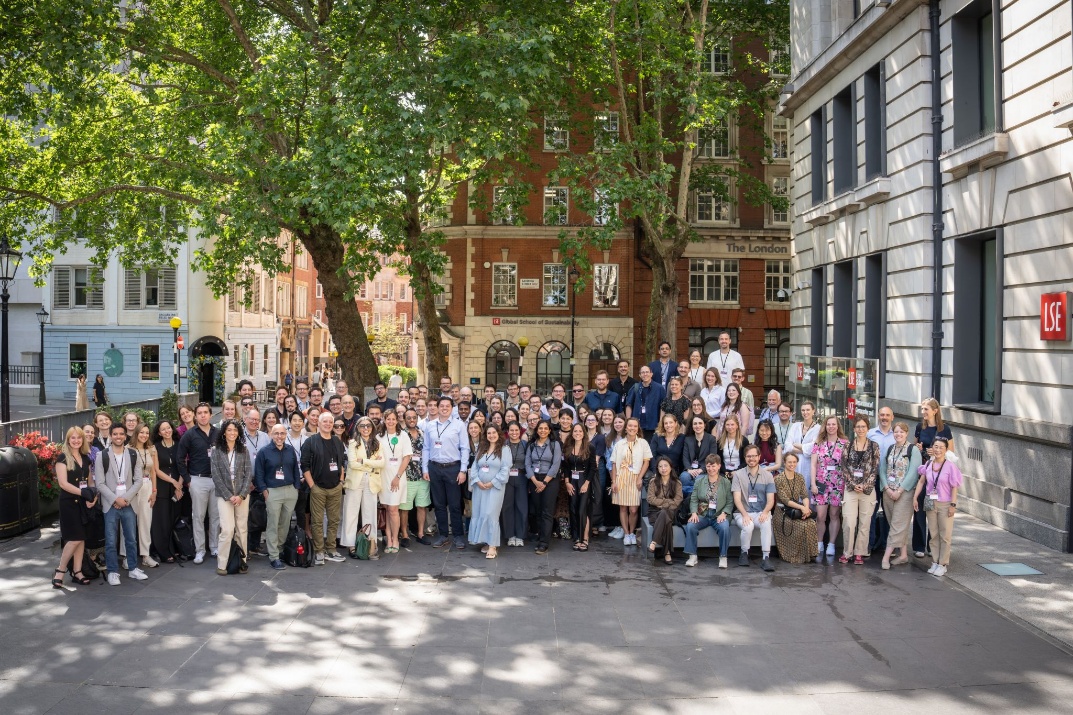
During the most recent annual meeting of TheorizingDAI, held at LSE in 2026, the collective scientific work of the community culminated in two important announcements. The first concerns a call for papers for a special issue of the European Journal of Information Systems titled “Theorizing the Data-AI Nexus”, co-edited by Cristina Alaimo, Lauren Waardenburg, Jonny Holmström, Lior Zalmanson, and Reza M. Baygi. The focus of this special issue is the same as that of the community: theorizing the relationships between data, AI, and social practice. The distinctive feature of this call is its emphasis on understanding these elements using an AND rather than an OR logic, which currently prevails in the field.
The second announcement concerns a soon-to-be-published editorial in EJIS co-authored by Cristina Alaimo, Jannis Kallinikos, Lauren Waardenburg and Youngjin Yoo. The purpose of this editorial is to support the theorizing efforts of researchers who are interested in contributing to the special issue or more broadly to the Data-AI nexus conversation. More specifically, it will unpack the relevance, challenges and opportunities associated with studying data and AI through their intersection rather than as isolated poles.
This blog post aims to introduce the TheorizingDAI conference, its different initiatives, and the special issue, concluding with an invitation to become part of the community and to submit your work. Researchers interested in these themes are encouraged to explore the full call for papers, while those interested in the broader activities of the community can follow us through our website or LinkedIn page.
Domenico di Prisco is an Assistant Professor of Management of Information Systems at IÉSEG School of Management.